
Chemical Intolerance And Chronic Illness

Chemical intolerance is often the common denominator for patients with chronic and complex illnesses that frustrate clear diagnoses and are unresponsive to care.

How common? Research indicates that one in five patients are seeking care because of chemical intolerance. Learn how to screen patients for chemical intolerance, the genetics and biochemistry involved, and therapeutic protocols for resolving this surprisingly common yet typically unrecognised condition.

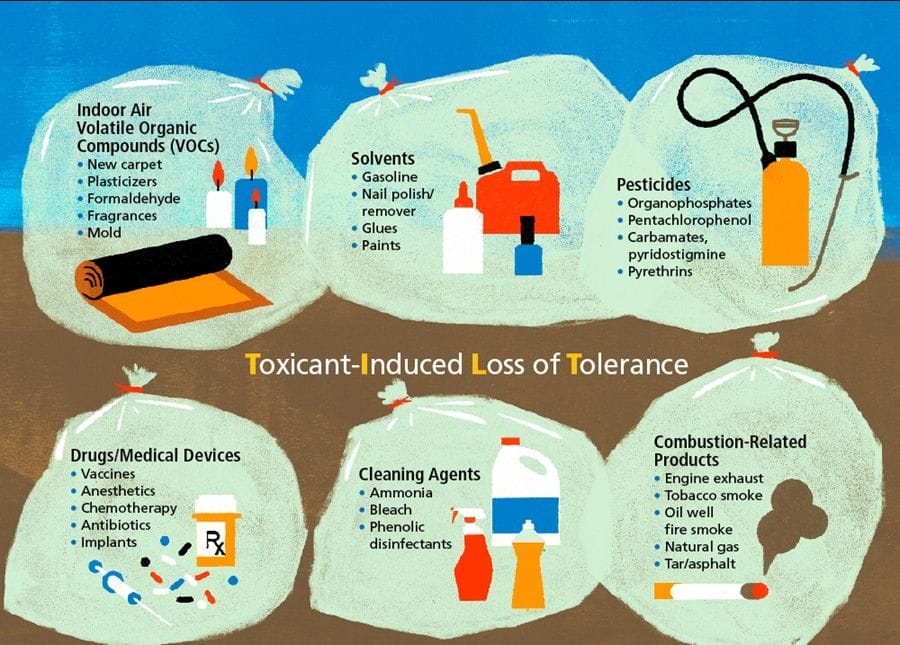
Four senses (sight, smell, taste, and touch) out of our five, encounter common chemicals every day. They’re found in pesticides, petrol, perfumes, vehicle exhaust, household cleaning products, personal care products, cigarette smoke, and others. Do you feel the following symptoms when you’re around these common chemicals?
If you experience the symptoms mentioned above in the presence of common chemicals, you might have Multiple Chemical Sensitivity (MCS) , also known as Idiopathic Environmental Intolerance. Simply put, it’s a collection of signs and symptoms you may experience upon repeated exposure to small amounts of chemicals you encounter every day over a prolonged period. It’s unfortunate that at the writing of this article, there’s still much debate whether Multiple Chemical Sensitivity or MCS for short, is a real disease entity or just a psychological one (it’s all in your head).

WHAT ARE THE CAUSES OF MCS? WHAT ARE ITS KNOWN TRIGGERS?

Chemicals in everyday products are the known triggers of MCS. But what is its exact cause? Nobody knows the exact cause or causes. A person who notices that he is sensitive to a chemical will quickly experience the onset of symptoms over a relatively short period. The chronic exposure to low levels of everyday chemicals will eventually lead to a point where your body can’t tolerate them any longer. You then become sensitised (your body becomes irritable) leading to the development of MCS symptoms.

The limbic system in your brain becomes hyperactive. Your limbic system is responsible for your emotions, mood, and communication in your autonomic nervous system. It’s no surprise that many symptoms of MCS can involve mood and behaviour. Researchers have observed that electrical activity in patients with MCS is increased, leading to heightened sensitivity to everyday chemicals compared to those who don’t have MCS.

People with MCS were also found to have defective detoxification of xenobiotic chemicals (foreign chemical substances) and low levels of glutathione (a powerful antioxidant) which is important for part of your livers detoxing actions. You know what that means, you get more circulating levels of toxic chemicals in your body.

Chronic, low-level exposure to everyday chemicals may impair parts of your body’s immune system.

MCS may increase in severity over time. Researchers describe the stages of MCS as follows: 

Stage 0 — Tolerance: You may be exposed to chemical triggers, but your body is able to adapt to it if the exposure is minimal. 
Stage 1 — Sensitisation: Low concentrations over short or long periods of time start to activate a range of vague symptoms. They may be overlooked as something else and are difficult to correlate with the exposure. 
Stage 2 — Inflammation:  Your organ systems begin to have chronic inflammation. Exposures to triggers may last for several days, even weeks.
Stage 3 — Deterioration: Your central nervous system becomes impaired. Chronic inflammation increases, which can start to damage organs. That may generate more severe forms of chronic diseases, such as heart attacks, and autoimmune issues. 

How Do You Identify Multiple Chemical Sensitivity?
The responses from MCS can vary from person to person. The same chemical can give two people with MCS completely different reactions. It also depends on the level of toxin exposure. Higher amounts may create a much more intense response. 

Here’s some of the most common MCS symptoms, as well as other issues that can accompany MCS.   

Symptoms
When you first start to experience MCS, you might brush off the symptoms or attribute them to something else. But these responses can escalate over time. You may develop severe reactions that happen immediately on exposure. 

Reactions or symptoms could include: 

  • Rashes
  • Joint pain 
  • Nausea 
  • Fatigue 
  • Headaches 
  • Gut issues  
  • Blood pressure changes 
  • Asthma attacks 
  • Brain fog 
  • Dermatitis 
  • Hormone disorders 
  • Fainting 
  • Poor circulation 
  • Bleeding in your extremities or on your skin 
  • Food and environmental allergies

Associated Issues
Researchers have also noticed that people with MCS have higher rates of other disorders and diseases. Rates of chronic fatigue and fibromyalgia are greater among those with MCS. Issues with the respiratory system — such as asthma, bronchitis, pneumonia, and sinusitis — are also prevalent. 

MCS might also affect your mental health. Studies suggest that MCS may be associated with panic disorder, depression, schizophrenia, and attention deficit hyperactivity disorder (ADHD). 

Researchers believe that the inflammation MCS generates in your body increases the likelihood of developing other issues. As an additional factor, MCS also damages your central nervous system. 

Do You Have Multiple Chemical Sensitivity?
With the complexity of symptoms and how much they vary between people, identifying MCS can be difficult. There isn’t a standard blood test, for example, that can diagnosis MCS. 

But you can take a questionnaire called the Quick Environmental Exposure and Sensitivity Inventory (QEESI). The QEESI is a scientifically-validated test developed through extensive research and clinical assessment. (ASK Us)

This simple test helps you assess your symptoms. You can take your results to your healthcare practitioner so he or she can better understand your situation.

While your health issues may appear random, they could all stem from sensitivity to chemicals in your environment. 

Identify Your Triggers
Although everyone with MCS differs, several items do seem to cause the most issues. Be keenly aware if any of the following cause issues for you: 

Pesticides or bug sprays
Smoke 
Air fresheners
Household cleaners
Gas or vehicle exhaust
Perfumes or products containing fragrance
Nail polishes and polish removers
Carpet or new furniture 
Specific foods or chlorinated water
Medications 
Personal care products, like lotions or hairspray

Recipes

Feeling overwhelmed by conflicting advice on what to eat during or after a cancer diagnosis? Manuela believes that food should be a source of joy, not confusion.

Explore her collection of nourishing recipes designed to support your body and well-being.

Each meal is designed to provide essential nutrients.

Start cooking and take a positive step toward better health today.

Empower through Knowledge

 With a solid foundation of knowledge, you become a powerful partner in your care. An empowered patient knows to ask critical questions about the evidence behind a complementary medicine therapy, its potential benefits, and any risks or interactions with conventional treatments.

Manuela disseminates evidence-based research helping you engaging into a genuine collaboration and working together to build a safe, effective, and holistic treatment plan.

By seeking out and understanding information, you move from being a passive recipient of care to an active participant in your own healing.

Metabolic Balance

Your body is unique, and so are your nutritional needs.

Manuela offers the internationally renowned Metabolic Balance program. Whether you are underweight or overweight, this personalised nutritional program helps you achieve optimal health, effectively rebalancing your body composition.

The program includes positive mindset techniques to support your emotional/stress eating problems, personal food preferences, meal ideas & recipes, and nutritional education. Prevention at its best!

Functional Medicine

Since 2001, the Institute for Functional Medicine (USA) has been directly accredited by Accreditation Council for Continuing Medical Education. The strict post-graduate training education is based on current science, evidence, and clinical reasoning and evaluated for its effectiveness. Manuela has obtained the internationally recognised Board Certification for Functional Medicine.

Supporting cancer patients with personalised and complementary lifestyle-based interventions helps reduce side effects of cancer treatments and improve outcomes.

Functional medicine plays a much-needed role in cancer care, emphasising low-risk therapeutic approaches that optimise a patient’s health during their survivorship journey.

Calm

The state of mind impacts health through the mind-body connection. There is a nexus between body and mind are one. The mind feeds the body just as the body feeds the mind.

Since emotions, feelings, thoughts, beliefs, actions, and behaviour impact and literally shape wellbeing, Manuela focuses on strengthening your mental and emotional life.

She strives to help you regain and maintain hope, calm, optimism, and inner peace. Manuela wants to know how you feel; she listens and empowers you with positive actions, step-by-step into wellness.

Regain Energy

Cancer-related is one of the most common side effects of cancer and its treatments. Like fatigue, cancer fatigue is whole-body exhaustion that you feel no matter how much sleep or rest you get.

Cancer fatigue takes exhaustion a step further: You feel physically, emotionally and mentally exhausted most of the time. Cancer fatigue may last a few weeks (acute) or for months or years (chronic).

To improve energy effectively, Manuela provides modalities ranging from mindfulness-based cognitive therapy therapies to herbal medicine and targeted nutritional interventions.

Clinical Detox

After the conclusion of cancer treatments, Manuela strongly recommends that you follow her clinical detoxification program.

After the conclusion of medical treatments, side-effects have lingering issues preventing a good recovery.

Manuela’s personalized program is designed to help you regain strength, balance, and wellness through a sensible, gentle, and effective detoxification process. It’s a path to a renewed you.

Personalised Diets

As a Clinical Nutritionist, Manuela provides personalised and appropriate dietary plans before, during and after cancer treatments.

She focuses on addressing your current nutritional status and develop the right diet for you. 

“One size does not fit all” principle applies to your diet. Each person is unique and therefore variability exists between nutrient-sense diets.

Manuela provides a detailed 7 day menu plan, shopping lists and recipes that reflect food preferences and sensitivities. The menu plans are easy to follow. Each food is selected for its specific content of nutrients. Healthy foods positively support your whole person wellness.

Preventive Care

We are increasingly aware that we face countless health challenges every day. Some of them will significantly contribute to a cancer diagnosis. We also have the tools to modify these challenges. Making proactive choices about your diet, increasing physical activity, managing stress, optimising hormonal balance, and minimising environmental exposures is a direct and potent strategy for your future health.

Manuela utilises validated Functional Medicine tests and blood work to identify the root causes of health issues and evaluate how different body systems interact and function. This approach aims to optimize overall health and well-being by addressing imbalances and deficiencies

Nutritional Medicine

Nutrition plays a foundational role in our health, influencing everything from our energy levels and mood to our susceptibility to illness. Nutritional Medicine is not just about avoiding unhealthy foods; it is about strategically using food and evidence-based nutritional supplements as therapeutic tools.

This approach recognises that each person’s nutritional needs are unique, influenced by their genetics, lifestyle, environment and specific health conditions.

Herbal Medicine

Herbal medicine is the oldest and the most widely used system of medicine in the world today. It is medicine made exclusively from plants.

Herbal medicine is validated by rigorous scientific research which has explored the complex chemistry of plants. Many modern pharmaceuticals have been modelled on, or derived from, phytochemicals found in herbs. Increasing research on herbal medicine demonstrates that liquid botanicals play a critical role during, before and after a diagnosis of cancer. Your safety is her priority. Manuela always conducts a thorough check for any potential interactions or contraindications between your herbal and medical treatments

Manuela seeks to provide only the highest quality full spectrum herbal extracts available.

Pathways to regain and maintaining wellbeing before, during and after cancer

Cancer requires negotiation and navigation. Decisions must be made. Directions must be pursued. The decisions and directions often occur in the middle of stress, fear, trauma, and many other challenging emotions. The skills with which people negotiate and navigate their cancer journey are better supported by combining conventional treatments with evidence-based natural medicine.

Manuela is dedicated to designing individual programs to support you regardless of your diagnosis and the stage of your cancer. She collects all critical information about your state of health and help you in your decision-making process with the wisdom and the experience that comes from years of clinical practice. She works in alignment with what you think, feel, say, and do. In this way, she honours your self-awareness, your knowledge and views and integrate them in safe practices.

Manuela started her practice in 2007 in London, followed by Singapore and Sri Lanka where she headed a cutting-edge Integrative Cancer Centre. Manuela has been supporting people living with cancer and their families in South-East Queensland since 2014. Manuela  is a PhD candidate, Centre for Healthcare Transformation, Queensland University of Technology; she has also completed a Master of Philosophy, Faculty of Medicine and Health, University of New England; a Master of Public Health in Nutrition, University of Queensland; a Master of Health Science in Herbal Medicine, University of New England and Bachelor of Complementary Medicine  . Manuela is a Board Certified Practitioner of Functional Medicine, with the prestigious Institute for Functional Medicine, Gig Harbour, USA; she is a certified Metabolic Balance and Fitgenes Practitioner.

Manuela maintains memberships and active training with the Australian Traditional Medicine Society (ATMS), the Nutrition Society of Australia (NSA), the Society of Integrative Oncology (USA). Manuela is also a member of Australasian Society of Behavioural Health and Medicine (ASBHM)

Manuela is a Co-Chair Health Literacy and Health Behaviour Subcommittee (IHLA), Boston, United States; a co-editor of a peer reviewed journal; a co-author of chapter books; a contributing author for multiple publications, a keynote speaker – National and International events; and podcaster. She is a workshops coordinator and facilitator for multiple events

Manuela has lectured at the College of Naturopathic Medicine (CNM, UK); at the Endeavour College of Natural Medicine (Brisbane and the Gold Coast)

Manuela Boyle consults exclusively by appointment is Brisbane and Online.