
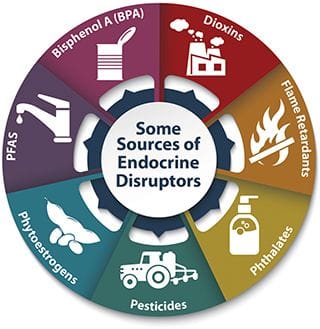
Common Endocrine-Disrupting Chemicals and Womenb s Health

It's quite astonishing how a wide array of chemicals found both in our surroundings and consumer products can cast an impact on female reproductive health.

These chemicals, known as endocrine-disrupting chemicals (EDCs), have been identified as potential disruptors that link to concerns like early puberty, complications in pregnancy duration, and various reproductive abnormalities. 

Picture this: a myriad of chemicals present in our surroundings and everyday products, subtly weaving their influence into the delicate fabric of female reproductive health. These chemicals, known as endocrine-disrupting chemicals (EDCs), have emerged as a group of compounds raising eyebrows due to their potential to disrupt the harmonious dance of hormones governing vital aspects like early puberty, pregnancy complexities, and other reproductive abnormalities. ??

The Unravelling of EDCs: A Complex Tale
EDCs hail from a multitude of sources, spanning industrial processes, agricultural practices, residential goods, and even pharmaceutical compounds. These elusive actors infiltrate our lives through channels as diverse as inhalation, dietary consumption, and direct contact. Interestingly, even heavy metals such as cadmium, lead, and mercury find themselves entangled in this intricate web.

Of particular note is the impact of personal care products, often marketed to women, as a notable source of EDC exposure. Think bisphenols, parabens, benzophenones, and phthalates – these are common culprits found in such products. What's intriguing is that young women aged 18 to 34, a demographic frequently drawn to an array of personal care items, may inadvertently subject themselves to these chemicals' influences.

The Timing Factor: Vulnerable Phases
Here's where timing comes into play. Women and their offspring may find themselves at a heightened vulnerability to EDC effects during sensitive life phases, including preconception and pregnancy. These chemicals can wield their influence on crucial hormonal pathways, potentially contributing to concerns like early onset of menstruation (menarche) and even conditions like polycystic ovarian syndrome (PCOS).

The Complex Web Unveiled
Peering into the vast realm of research uncovers a tapestry woven with intricate threads. While phenolic 2,5-DCP from dichlorobenzene, often used as a fumigant, has been implicated in early menarche, it's essential to recognize that this is merely a snapshot. An entire gamut of endocrine disruptors coexists within our environment, playing various roles in shaping this complex narrative.

Bisphenol molecules 

Diving into the intricate world of reproductive health, we unveil the role of bisphenol molecules – compounds that share a striking resemblance to oestrogens and can potentially wield influence over hormonal regulation and estrogen receptor activity. ??

These bisphenols could potentially cast their shadow on critical processes like oocyte maturation, spermatogenesis, and even the development of the reproductive system itself. An in-depth review from 2019 delves into the matter, specifically highlighting bisphenol S (BPS), which has replaced BPA in many products. It suggests that BPS might just have a similar negative impact on reproduction, potentially leading to fertility issues. ??

Surprisingly, BPS has been marketed as an industrial alternative to the notorious endocrine disruptor, BPA. You might even find it in products boasting the "BPA-free" label. This shift has prompted concern as both BPS and its cousin bisphenol F (BPF) have made their way into our lives. Data from NHANES 2013-2014 paints a vivid picture – BPA, BPS, and BPF were detected in 95.7%, 89.4%, and 66.5% of randomly selected urine samples, hinting that our exposure to these compounds might be more widespread than we imagined. ??

In the realm of human health, intriguing associations have emerged. High urinary BPA levels seem to correspond with increased serum levels of hormones like testosterone, oestradiol, and pregnenolone in girls facing early puberty. It's noteworthy that estrogen metabolism and BPA levels appear linked, although the relationship doesn't automatically imply causation. Similar connections have been observed between BPA and conditions like polycystic ovarian syndrome (PCOS) and ovarian failure. This poses some compelling questions about the role of these compounds in our reproductive well-being. ??

Non-human animals haven't been spared from the effects of bisphenols either. BPA has shown its ability to disrupt the Hypothalamus-Pituitary-Gonad (HPG) axis in species ranging from mice and rats to zebrafish. In the aquatic world, a study with C. riparius midges showcases a fascinating twist. After just a 24-hour exposure to BPS, these tiny larvae displayed altered transcription profiles in genes involved in the endocrine and biotransformation pathways. The findings hint at BPS potentially acting as a hormone agonist, triggering a cascade of molecular responses. ??

This journey through the realm of bisphenols and their impact on reproductive health underscores the complex interplay between chemicals and our bodies. 

Reference
Chang CJ, O’Brien KM, Keil AP, et al. Use of straighteners and other hair products and incident uterine cancer. J Natl Cancer Inst. 2022;114(12):1636-1645. doi:10.1093/jnci/djac165
Piazza MJ, Urbanetz AA. Environmental toxins and the impact of other endocrine disrupting chemicals in women’s reproductive health. JBRA Assist Reprod. 2019;23(2):154-164. doi:10.5935/1518-0557.20190016
Lauretta R, Sansone A, Sansone M, Romanelli F, Appetecchia M. Endocrine disrupting chemicals: effects on endocrine glands. Front Endocrinol (Lausanne). 2019;10:178. doi:10.3389/fendo.2019.00178
Peinado FM, Iribarne-Durán LM, Ocón-Hernández O, Olea N, Artacho-Cordón F. Endocrine disrupting chemicals in cosmetics and personal care products and risk of endometriosis. IntechOpen. Published online June 29, 2020. doi:10.5772/intechopen.93091
Millennial women key to growth in cosmetics industry. Tabs Analytics. Published January 20, 2016. Accessed August 2, 2023. https://www.tabsanalytics.com/blog/millennial-women-key-to-growth-in-cosmetics-industry
Di Renzo GC, Conry JA, Blake J, et al. International Federation of Gynecology and Obstetrics opinion on reproductive health impacts of exposure to toxic environmental chemicals. Int J Gynaecol Obstet. 2015;131(3):219-225. doi:10.1016/j.ijgo.2015.09.002
Buttke DE, Sircar K, Martin C. Exposures to endocrine-disrupting chemicals and age of menarche in adolescent girls in NHANES (2003-2008). Environ Health Perspect. 2012;120(11):1613-1618. doi:10.1289/ehp.1104748
Grindler NM, Allsworth JE, Macones GA, Kannan K, Roehl KA, Cooper AR. Persistent organic pollutants and early menopause in U.S. women. PLoS One. 2015;10(1):E116057. doi:10.1371/journal.pone.0116057
Kawa IA, Akbar masood, Fatima Q, et al. Endocrine disrupting chemical bisphenol A and its potential effects on female health. Diabetes Metab Syndr. 2021;15(3):803-811. doi:10.1016/j.dsx.2021.03.031
 Centers for Disease Control and Disease Prevention. Fourth national report on human exposure to environmental chemicals. Published February 2015. Accessed August 2, 2023. https://www.cdc.gov/biomonitoring/pdf/fourthreport_updatedtables_feb2015.pdf
 Mikolajewska K, Stragierowicz J, Gromadzinska J. Bisphenol A – application, sources of exposure and potential risks in infants, children and pregnant women. Int J Occup Med Environ Health. 2015;28(2):209-241. doi:10.13075/ijomeh.1896.00343
 Gonsioroski A, Mourikes VE, Flaws JA. Endocrine disruptors in water and their effects on the reproductive system. Int J Mol Sci. 2020;21(6):1929. doi:10.3390/ijms21061929
 Ješeta M, Crha T, ?áková J, Ventruba P. Bisphenols in the pathology of reproduction. Ceska Gynekol. 2019;84(2):161-165.
 Lehmler HJ, Liu B, Gadogbe M, Bao W. Exposure to bisphenol A, bisphenol F, and bisphenol S in U.S. adults and children: the National Health and Nutrition Examination Survey 2013–2014. ACS Omega. 2018;3(6):6523-6532. doi:10.1021/acsomega.8b00824
 Lee S, Kang S, Choi M, et al. Changes in steroid metabolism among girls with precocious puberty may not be associated with urinary levels of bisphenol A. Reprod Toxicol. 2014;44:1-6. doi:10.1016/j.reprotox.2013.03.008


Recipes

Feeling overwhelmed by conflicting advice on what to eat during or after a cancer diagnosis? Manuela believes that food should be a source of joy, not confusion.

Explore her collection of nourishing recipes designed to support your body and well-being.

Each meal is designed to provide essential nutrients.

Start cooking and take a positive step toward better health today.

Empower through Knowledge

 With a solid foundation of knowledge, you become a powerful partner in your care. An empowered patient knows to ask critical questions about the evidence behind a complementary medicine therapy, its potential benefits, and any risks or interactions with conventional treatments.

Manuela disseminates evidence-based research helping you engaging into a genuine collaboration and working together to build a safe, effective, and holistic treatment plan.

By seeking out and understanding information, you move from being a passive recipient of care to an active participant in your own healing.

Metabolic Balance

Your body is unique, and so are your nutritional needs.

Manuela offers the internationally renowned Metabolic Balance program. Whether you are underweight or overweight, this personalised nutritional program helps you achieve optimal health, effectively rebalancing your body composition.

The program includes positive mindset techniques to support your emotional/stress eating problems, personal food preferences, meal ideas & recipes, and nutritional education. Prevention at its best!

Functional Medicine

Since 2001, the Institute for Functional Medicine (USA) has been directly accredited by Accreditation Council for Continuing Medical Education. The strict post-graduate training education is based on current science, evidence, and clinical reasoning and evaluated for its effectiveness. Manuela has obtained the internationally recognised Board Certification for Functional Medicine.

Supporting cancer patients with personalised and complementary lifestyle-based interventions helps reduce side effects of cancer treatments and improve outcomes.

Functional medicine plays a much-needed role in cancer care, emphasising low-risk therapeutic approaches that optimise a patient’s health during their survivorship journey.

Calm

The state of mind impacts health through the mind-body connection. There is a nexus between body and mind are one. The mind feeds the body just as the body feeds the mind.

Since emotions, feelings, thoughts, beliefs, actions, and behaviour impact and literally shape wellbeing, Manuela focuses on strengthening your mental and emotional life.

She strives to help you regain and maintain hope, calm, optimism, and inner peace. Manuela wants to know how you feel; she listens and empowers you with positive actions, step-by-step into wellness.

Regain Energy

Cancer-related is one of the most common side effects of cancer and its treatments. Like fatigue, cancer fatigue is whole-body exhaustion that you feel no matter how much sleep or rest you get.

Cancer fatigue takes exhaustion a step further: You feel physically, emotionally and mentally exhausted most of the time. Cancer fatigue may last a few weeks (acute) or for months or years (chronic).

To improve energy effectively, Manuela provides modalities ranging from mindfulness-based cognitive therapy therapies to herbal medicine and targeted nutritional interventions.

Clinical Detox

After the conclusion of cancer treatments, Manuela strongly recommends that you follow her clinical detoxification program.

After the conclusion of medical treatments, side-effects have lingering issues preventing a good recovery.

Manuela’s personalized program is designed to help you regain strength, balance, and wellness through a sensible, gentle, and effective detoxification process. It’s a path to a renewed you.

Personalised Diets

As a Clinical Nutritionist, Manuela provides personalised and appropriate dietary plans before, during and after cancer treatments.

She focuses on addressing your current nutritional status and develop the right diet for you. 

“One size does not fit all” principle applies to your diet. Each person is unique and therefore variability exists between nutrient-sense diets.

Manuela provides a detailed 7 day menu plan, shopping lists and recipes that reflect food preferences and sensitivities. The menu plans are easy to follow. Each food is selected for its specific content of nutrients. Healthy foods positively support your whole person wellness.

Preventive Care

We are increasingly aware that we face countless health challenges every day. Some of them will significantly contribute to a cancer diagnosis. We also have the tools to modify these challenges. Making proactive choices about your diet, increasing physical activity, managing stress, optimising hormonal balance, and minimising environmental exposures is a direct and potent strategy for your future health.

Manuela utilises validated Functional Medicine tests and blood work to identify the root causes of health issues and evaluate how different body systems interact and function. This approach aims to optimize overall health and well-being by addressing imbalances and deficiencies

Nutritional Medicine

Nutrition plays a foundational role in our health, influencing everything from our energy levels and mood to our susceptibility to illness. Nutritional Medicine is not just about avoiding unhealthy foods; it is about strategically using food and evidence-based nutritional supplements as therapeutic tools.

This approach recognises that each person’s nutritional needs are unique, influenced by their genetics, lifestyle, environment and specific health conditions.

Herbal Medicine

Herbal medicine is the oldest and the most widely used system of medicine in the world today. It is medicine made exclusively from plants.

Herbal medicine is validated by rigorous scientific research which has explored the complex chemistry of plants. Many modern pharmaceuticals have been modelled on, or derived from, phytochemicals found in herbs. Increasing research on herbal medicine demonstrates that liquid botanicals play a critical role during, before and after a diagnosis of cancer. Your safety is her priority. Manuela always conducts a thorough check for any potential interactions or contraindications between your herbal and medical treatments

Manuela seeks to provide only the highest quality full spectrum herbal extracts available.

Pathways to regain and maintaining wellbeing before, during and after cancer

Cancer requires negotiation and navigation. Decisions must be made. Directions must be pursued. The decisions and directions often occur in the middle of stress, fear, trauma, and many other challenging emotions. The skills with which people negotiate and navigate their cancer journey are better supported by combining conventional treatments with evidence-based natural medicine.

Manuela is dedicated to designing individual programs to support you regardless of your diagnosis and the stage of your cancer. She collects all critical information about your state of health and help you in your decision-making process with the wisdom and the experience that comes from years of clinical practice. She works in alignment with what you think, feel, say, and do. In this way, she honours your self-awareness, your knowledge and views and integrate them in safe practices.

Manuela started her practice in 2007 in London, followed by Singapore and Sri Lanka where she headed a cutting-edge Integrative Cancer Centre. Manuela has been supporting people living with cancer and their families in South-East Queensland since 2014. Manuela  is a PhD candidate, Centre for Healthcare Transformation, Queensland University of Technology; she has also completed a Master of Philosophy, Faculty of Medicine and Health, University of New England; a Master of Public Health in Nutrition, University of Queensland; a Master of Health Science in Herbal Medicine, University of New England and Bachelor of Complementary Medicine  . Manuela is a Board Certified Practitioner of Functional Medicine, with the prestigious Institute for Functional Medicine, Gig Harbour, USA; she is a certified Metabolic Balance and Fitgenes Practitioner.

Manuela maintains memberships and active training with the Australian Traditional Medicine Society (ATMS), the Nutrition Society of Australia (NSA), the Society of Integrative Oncology (USA). Manuela is also a member of Australasian Society of Behavioural Health and Medicine (ASBHM)

Manuela is a Co-Chair Health Literacy and Health Behaviour Subcommittee (IHLA), Boston, United States; a co-editor of a peer reviewed journal; a co-author of chapter books; a contributing author for multiple publications, a keynote speaker – National and International events; and podcaster. She is a workshops coordinator and facilitator for multiple events

Manuela has lectured at the College of Naturopathic Medicine (CNM, UK); at the Endeavour College of Natural Medicine (Brisbane and the Gold Coast)

Manuela Boyle consults exclusively by appointment is Brisbane and Online.