
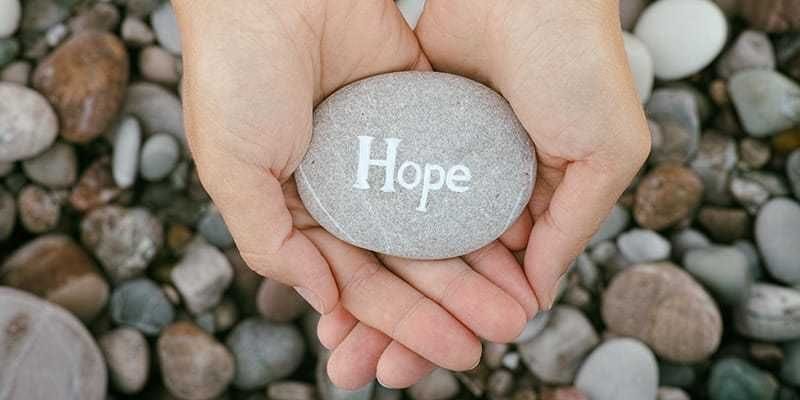
The Philosophy of Hope

Hope can be a major tool of empowerment and an element for sustaining life and the will to live. We hope for better times. We hope for remission. We hope to prolong life by averting death through medical treatment and supportive care. Or, if disease progresses, we hope to control pain, side effects, and suffering.  We hope for treatments that can cure or palliate and make the disease stable.

The Oxford Dictionary defines hope as “to entertain expectations of something desired.” Hope embodies an emotional component beyond expectation that is an important part of human experience. Hope is a precious commodity that is often hard to define, but is very important to keep alive. It often gives a person a glimpse of the future and is supported by enduring fortitude, courage, and ingenuity, often in the face of adversity. Hope is synonymous with a positive will to live and affects a positive outcome, whatever that might be.

Hope can be a part of one’s upbringing from childhood. It can also be developed through life experiences, passed on from friends, from spiritual or religious philosophy, or from examples in life. A lot depends on development of one’s personality and how one has dealt with crises during life. The better one copes with crises, the better chance one has of being more hopeful. An interesting example is that of Viktor Frankl, a survivor of a German concentration camp during World War II. Facing death, he found that many of his fellow captives continued to maintain a reason and purpose for living. They often fared better than those who found the concentration camp experience nothing but dreadful and overwhelming.  They believed that hopelessness had a significant effect on the human response to illness. This lack of optimism in the form of hopelessness has been shown to predict poorer survival among breast cancer patients

No matter what stage one’s cancer is, setting short-term and long-term goals will help define and achieve life’s purposes.  Survivors are well advised to hope for the best, but prepare for the worst.  They can live with hope for a cure, a remission, or stable cancer without suffering and enjoy high quality of life with family and friends for as long as possible.

Hope can be reduced by loss of empathy and compassion and by withdrawing oneself from reality, from family and friends, and from the medical support team. Patients may experience psychologically depressing or destructive medical or social processes if they feel that life is disappointing and unsatisfactory.  They may involve others in this destructive pattern that has grave psychological implications and indicates a process of utter despair.  So to feel embedded in a network of caring at a time of serious illness is deeply reassuring. The will to live is not the denial of death, but the intensification of a life experience, which comes with the realisation of how finite life truly is.

As health professionals believe that a combination of medical therapy, adoption of healthy lifestyles, medical prevention and supportive care offers the best chance to maintain a patient’s quality of life. Satisfaction of these diverse needs demonstrates the powerful connection between mind and body. Obtaining relief from pain, nausea, or fatigue, for example, restores a sense of calm. Sufficient sleep, appropriate exercise, and good nutrition are energising. Discussing one’s negative feelings candidly with others can diminish their effect. Learning to control blood pressure and heart rate through such means as biofeedback and self-hypnosis can foster a sense of personal power. Exploring one’s creative potential can lead to joy and transcendence.

Positive Thinking
When diagnosed with cancer, maintaining a positive attitude can be difficult. Individuals must confront many obstacles, including the side effects of the illness and treatment, as well as feelings of fear, anger, depression, and loneliness. All of this can impact even the most buoyant of personalities. One way to maintain a positive attitude is by setting reasonable, achievable goals. Another helpful hint is to put energy into activities that bring satisfaction. Doing one’s best to maintain a positive attitude helps to cope with illness.

Hope
For patients with cancer, the future is often unknown, and hope is what keeps them alive to endure treatments and social and personal adversities. Hope is supported by the positive attitudes of the medical team, but can also be very fragile.  Anything that demoralises a person can negate the feeling of hope, which can make a difference in accepting or denying the next set of treatments if failure occurs. The feeling of hope and will to live will vary daily depending on one’s current physical status, psychological outlook (depression or elation), and treatment success or failure. The hope is to be kept alive, to live, and to recover through a resilient attitude rather than a feeling of despair. Hope is often a shared feeling with one’s personal team of family and friends because the future is often nebulous.  Hope keeps one alive to fight for another day, a month, a year, and a return to better health. It affords another opportunity to respond to therapy and to live.

“Hope is the most beautiful of all the affections, and doth much to the prolongation of life, if it be not too often frustrated, but entertaineth fancy with an expectation of good.” Francis Bacon


Recipes

Feeling overwhelmed by conflicting advice on what to eat during or after a cancer diagnosis? Manuela believes that food should be a source of joy, not confusion.

Explore her collection of nourishing recipes designed to support your body and well-being.

Each meal is designed to provide essential nutrients.

Start cooking and take a positive step toward better health today.

Empower through Knowledge

 With a solid foundation of knowledge, you become a powerful partner in your care. An empowered patient knows to ask critical questions about the evidence behind a complementary medicine therapy, its potential benefits, and any risks or interactions with conventional treatments.

Manuela disseminates evidence-based research helping you engaging into a genuine collaboration and working together to build a safe, effective, and holistic treatment plan.

By seeking out and understanding information, you move from being a passive recipient of care to an active participant in your own healing.

Metabolic Balance

Your body is unique, and so are your nutritional needs.

Manuela offers the internationally renowned Metabolic Balance program. Whether you are underweight or overweight, this personalised nutritional program helps you achieve optimal health, effectively rebalancing your body composition.

The program includes positive mindset techniques to support your emotional/stress eating problems, personal food preferences, meal ideas & recipes, and nutritional education. Prevention at its best!

Functional Medicine

Since 2001, the Institute for Functional Medicine (USA) has been directly accredited by Accreditation Council for Continuing Medical Education. The strict post-graduate training education is based on current science, evidence, and clinical reasoning and evaluated for its effectiveness. Manuela has obtained the internationally recognised Board Certification for Functional Medicine.

Supporting cancer patients with personalised and complementary lifestyle-based interventions helps reduce side effects of cancer treatments and improve outcomes.

Functional medicine plays a much-needed role in cancer care, emphasising low-risk therapeutic approaches that optimise a patient’s health during their survivorship journey.

Calm

The state of mind impacts health through the mind-body connection. There is a nexus between body and mind are one. The mind feeds the body just as the body feeds the mind.

Since emotions, feelings, thoughts, beliefs, actions, and behaviour impact and literally shape wellbeing, Manuela focuses on strengthening your mental and emotional life.

She strives to help you regain and maintain hope, calm, optimism, and inner peace. Manuela wants to know how you feel; she listens and empowers you with positive actions, step-by-step into wellness.

Regain Energy

Cancer-related is one of the most common side effects of cancer and its treatments. Like fatigue, cancer fatigue is whole-body exhaustion that you feel no matter how much sleep or rest you get.

Cancer fatigue takes exhaustion a step further: You feel physically, emotionally and mentally exhausted most of the time. Cancer fatigue may last a few weeks (acute) or for months or years (chronic).

To improve energy effectively, Manuela provides modalities ranging from mindfulness-based cognitive therapy therapies to herbal medicine and targeted nutritional interventions.

Clinical Detox

After the conclusion of cancer treatments, Manuela strongly recommends that you follow her clinical detoxification program.

After the conclusion of medical treatments, side-effects have lingering issues preventing a good recovery.

Manuela’s personalized program is designed to help you regain strength, balance, and wellness through a sensible, gentle, and effective detoxification process. It’s a path to a renewed you.

Personalised Diets

As a Clinical Nutritionist, Manuela provides personalised and appropriate dietary plans before, during and after cancer treatments.

She focuses on addressing your current nutritional status and develop the right diet for you. 

“One size does not fit all” principle applies to your diet. Each person is unique and therefore variability exists between nutrient-sense diets.

Manuela provides a detailed 7 day menu plan, shopping lists and recipes that reflect food preferences and sensitivities. The menu plans are easy to follow. Each food is selected for its specific content of nutrients. Healthy foods positively support your whole person wellness.

Preventive Care

We are increasingly aware that we face countless health challenges every day. Some of them will significantly contribute to a cancer diagnosis. We also have the tools to modify these challenges. Making proactive choices about your diet, increasing physical activity, managing stress, optimising hormonal balance, and minimising environmental exposures is a direct and potent strategy for your future health.

Manuela utilises validated Functional Medicine tests and blood work to identify the root causes of health issues and evaluate how different body systems interact and function. This approach aims to optimize overall health and well-being by addressing imbalances and deficiencies

Nutritional Medicine

Nutrition plays a foundational role in our health, influencing everything from our energy levels and mood to our susceptibility to illness. Nutritional Medicine is not just about avoiding unhealthy foods; it is about strategically using food and evidence-based nutritional supplements as therapeutic tools.

This approach recognises that each person’s nutritional needs are unique, influenced by their genetics, lifestyle, environment and specific health conditions.

Herbal Medicine

Herbal medicine is the oldest and the most widely used system of medicine in the world today. It is medicine made exclusively from plants.

Herbal medicine is validated by rigorous scientific research which has explored the complex chemistry of plants. Many modern pharmaceuticals have been modelled on, or derived from, phytochemicals found in herbs. Increasing research on herbal medicine demonstrates that liquid botanicals play a critical role during, before and after a diagnosis of cancer. Your safety is her priority. Manuela always conducts a thorough check for any potential interactions or contraindications between your herbal and medical treatments

Manuela seeks to provide only the highest quality full spectrum herbal extracts available.

Pathways to regain and maintaining wellbeing before, during and after cancer

Cancer requires negotiation and navigation. Decisions must be made. Directions must be pursued. The decisions and directions often occur in the middle of stress, fear, trauma, and many other challenging emotions. The skills with which people negotiate and navigate their cancer journey are better supported by combining conventional treatments with evidence-based natural medicine.

Manuela is dedicated to designing individual programs to support you regardless of your diagnosis and the stage of your cancer. She collects all critical information about your state of health and help you in your decision-making process with the wisdom and the experience that comes from years of clinical practice. She works in alignment with what you think, feel, say, and do. In this way, she honours your self-awareness, your knowledge and views and integrate them in safe practices.

Manuela started her practice in 2007 in London, followed by Singapore and Sri Lanka where she headed a cutting-edge Integrative Cancer Centre. Manuela has been supporting people living with cancer and their families in South-East Queensland since 2014. Manuela  is a PhD candidate, Centre for Healthcare Transformation, Queensland University of Technology; she has also completed a Master of Philosophy, Faculty of Medicine and Health, University of New England; a Master of Public Health in Nutrition, University of Queensland; a Master of Health Science in Herbal Medicine, University of New England and Bachelor of Complementary Medicine  . Manuela is a Board Certified Practitioner of Functional Medicine, with the prestigious Institute for Functional Medicine, Gig Harbour, USA; she is a certified Metabolic Balance and Fitgenes Practitioner.

Manuela maintains memberships and active training with the Australian Traditional Medicine Society (ATMS), the Nutrition Society of Australia (NSA), the Society of Integrative Oncology (USA). Manuela is also a member of Australasian Society of Behavioural Health and Medicine (ASBHM)

Manuela is a Co-Chair Health Literacy and Health Behaviour Subcommittee (IHLA), Boston, United States; a co-editor of a peer reviewed journal; a co-author of chapter books; a contributing author for multiple publications, a keynote speaker – National and International events; and podcaster. She is a workshops coordinator and facilitator for multiple events

Manuela has lectured at the College of Naturopathic Medicine (CNM, UK); at the Endeavour College of Natural Medicine (Brisbane and the Gold Coast)

Manuela Boyle consults exclusively by appointment is Brisbane and Online.