
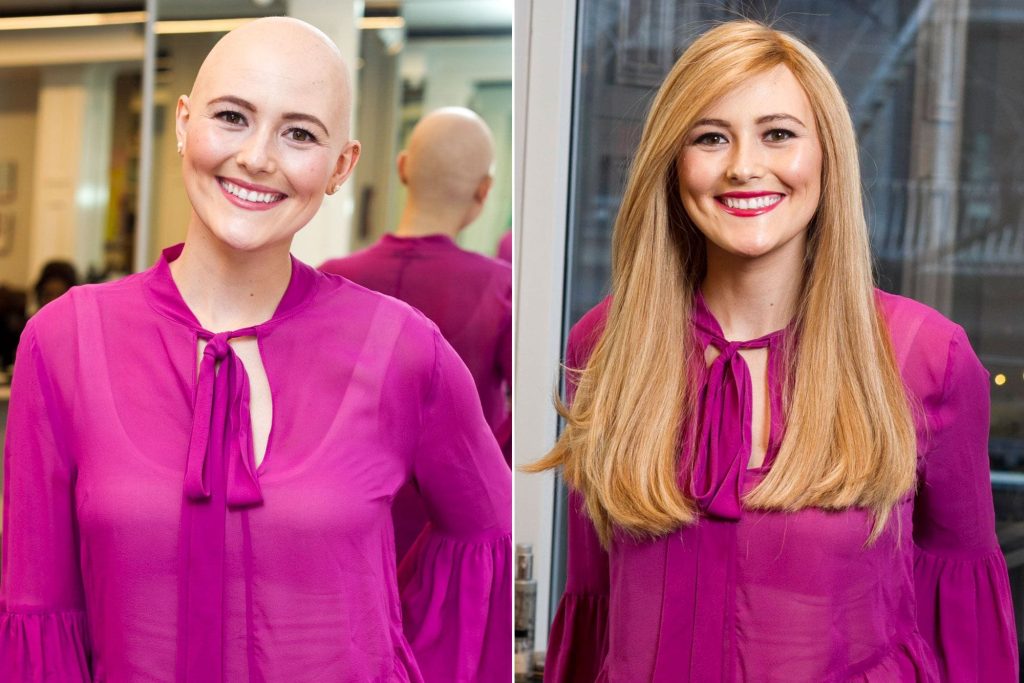
How To Wear A Wig With Confidence

Hair starts to fall out within one to three weeks after starting chemotherapy and may become noticeable one to two months later. Some scalps become tender and extremely sensitive to the touch.

Some people cut their hair shorter before chemo to make the transition less stressful. But if you’ve already begun chemo, it might not be worthwhile.

When you’re ready to shave, use electric clippers, not razors, and never clip down to the scalp. Leave an inch in length, especially if you have stiff or coarse hair. If you clip it to the scalp, the rigid hair will push back inside and make your sensitive scalp even more tender when you sleep on it or touch it. Leaving a bit of length will let it fall flat into a forgiving cap. You might find itchy hairs all over your pillow and clothes during hair loss. Wearing a mesh cap can help catch the strands.

If your goal is to match your wig to your real hair colour, keep a lock of it to show your wig stylist. Visit a stylist before you lose all of your hair, if you can. Or at least take photos of your hairstyle as a reference. For the most seamless transition, select your wig before starting chemo and then wait until your hair is just starting to thin to begin wearing it.

You might want to wear it even as your hair begins to grow back. According to this 2019 study, most people experience hair regrowth around three months after completing their cancer treatment and stop wearing wigs one year after chemotherapy. But some people continue to wear wigs until their hair grows out longer or because their hair regrowth is initially different from their pre-chemo hair.

During chemotherapy, it’s important to take care of your scalp, which will dry out because your skin stops producing body oils. Support the health of your hair follicles so that the day that you stop all your treatment, your hair can start to grow back prolifically without any deterrence. Dry skin is a deterrent because those layers of dead skin cells block the openings and make it hard for new hair to break through the surface. Exfoliate your scalp often using a soft brush or exfoliating gloves in the shower. A cleanser with salicylic acid or leave-in treatment also helps slough off dry skin. And finally, keep it moisturised with a gentle conditioner. I recommend you use coconut oil  to promote healthy hair regrowth, too.

Where to shop for a wig
Shop locally if you can. Ask me for recommendations. Trying on wigs in person with a professional stylist at the helm will offer the best experience. You’ll leave with a wig that suits your style, colour tone and budget. The stylist might even be able to customise the wig by trimming bulky areas and adding a more natural hairline, such as baby hairs and sideburns.

If you must shop online, make sure the store has a good return policy and instructions for measuring your own head using a sewing measuring tape.

The in-person salon consultation, which should be free, should be a conversation about your style, your activities, and how you’re dealing with chemotherapy treatment and cancer.

Synthetic vs. human hair wigs
Wigs are made from either synthetic fibre, human hair, or a combination of both. Wigs made of human hair are more expensive, costing between $800 and $6,000.

Synthetic wigs are often made of acrylic fibres produced in Japan. They hold their style even on humid days and don’t need to be washed as often as human-hair wigs — something to consider because going through chemo doesn’t afford you much energy to do things such as regularly washing and styling a wig. You just need to keep these wigs away from heat — dryers, hot tools and even the stove. Generally, synthetic wigs last for up to five months with daily use.

If you opt for human hair, you can choose the ethnicity, style and texture for a more natural look. Wigs made of human hair are primarily cut in Asia. Wigs made with finer European hair are less common and as much as 20 times more expensive. Human hair can withstand the same treatments your natural hair could, including rolling, cutting, hot tools and dyeing. But these wigs are heavier than synthetics and require more maintenance. Human hair wigs last for up to one year with daily use.

Wig types
Wigs are constructed in two ways: machine-made and hand-tied.

Machine-made wigs are the most affordable, featuring open wefts — strands of hair fibres that are sewn or glued to tracks of stretchy material to make layered curtains of hair. The back and sides are open for ventilation, while the hair on top is often lightly teased or crimped to hide the cap. 

Hand-tied wigs feature soft, flexible mesh caps to which individual hair strands are tied. The cap moulds to the shape of your head, and you can part a hand-tied wig in any direction and have more freedom to style it however you’d like. The hair looks like it’s growing right out of your scalp because you can actually see through to your scalp without bulky fabric in the way.

Another characteristic you might want in your wig is a lace front, which is a fine mesh along the front that companies sew hair into to mimic a natural-looking hairline.

Accessories
When hair falls out, the scalp may feel tender or sensitive. Some wigs can irritate the scalp, so wearing a bamboo or cotton skullcap between the scalp and the wig can provide a protective barrier — and help secure the wig and absorb sweat. 

A velvety wig band can be worn instead of or in addition to a wig cap. 

When you’re not wearing your wig, you’ll want to store it on a wig stand away from sunlight, heat, moisture and dust.

How to wear and care
Wearing a wig isn’t complicated, but proper alignment is key. If you’re buying your wig in a walk-in store, the stylist should show you how to put it on and adjust it.

Generally, a wig should be washed after 14 to 18 wearings, but because chemo patients have such dry scalps, they could go up to a month before washing. You should wash your wig more often to remove sweat and dirt if you’re especially active outdoors. Gently swirl your wig in a mixture of cold water and gentle shampoo. Let it soak for a few minutes, then rinse with cold water. Lightly wrap the wig in a towel to remove excess water and drape it on a wig stand to dry. Once completely dry, brush it with a plastic or wire brush using light, short strokes. A wire wig brush is best, as a standard hairbrush with nylon bristles can overstretch and damage wig hair.

You shouldn’t use heated styling tools or a hair dryer on a synthetic wig unless it is labelled “heat friendly” or “heat defiant,” a feature that can double the price of the wig.

A good wig stylist can also help maintain, trim and repair your wig to make it last longer. Synthetic wigs can get a little crunchy over time.

Recipes

Feeling overwhelmed by conflicting advice on what to eat during or after a cancer diagnosis? Manuela believes that food should be a source of joy, not confusion.

Explore her collection of nourishing recipes designed to support your body and well-being.

Each meal is designed to provide essential nutrients.

Start cooking and take a positive step toward better health today.

Empower through Knowledge

 With a solid foundation of knowledge, you become a powerful partner in your care. An empowered patient knows to ask critical questions about the evidence behind a complementary medicine therapy, its potential benefits, and any risks or interactions with conventional treatments.

Manuela disseminates evidence-based research helping you engaging into a genuine collaboration and working together to build a safe, effective, and holistic treatment plan.

By seeking out and understanding information, you move from being a passive recipient of care to an active participant in your own healing.

Metabolic Balance

Your body is unique, and so are your nutritional needs.

Manuela offers the internationally renowned Metabolic Balance program. Whether you are underweight or overweight, this personalised nutritional program helps you achieve optimal health, effectively rebalancing your body composition.

The program includes positive mindset techniques to support your emotional/stress eating problems, personal food preferences, meal ideas & recipes, and nutritional education. Prevention at its best!

Functional Medicine

Since 2001, the Institute for Functional Medicine (USA) has been directly accredited by Accreditation Council for Continuing Medical Education. The strict post-graduate training education is based on current science, evidence, and clinical reasoning and evaluated for its effectiveness. Manuela has obtained the internationally recognised Board Certification for Functional Medicine.

Supporting cancer patients with personalised and complementary lifestyle-based interventions helps reduce side effects of cancer treatments and improve outcomes.

Functional medicine plays a much-needed role in cancer care, emphasising low-risk therapeutic approaches that optimise a patient’s health during their survivorship journey.

Calm

The state of mind impacts health through the mind-body connection. There is a nexus between body and mind are one. The mind feeds the body just as the body feeds the mind.

Since emotions, feelings, thoughts, beliefs, actions, and behaviour impact and literally shape wellbeing, Manuela focuses on strengthening your mental and emotional life.

She strives to help you regain and maintain hope, calm, optimism, and inner peace. Manuela wants to know how you feel; she listens and empowers you with positive actions, step-by-step into wellness.

Regain Energy

Cancer-related is one of the most common side effects of cancer and its treatments. Like fatigue, cancer fatigue is whole-body exhaustion that you feel no matter how much sleep or rest you get.

Cancer fatigue takes exhaustion a step further: You feel physically, emotionally and mentally exhausted most of the time. Cancer fatigue may last a few weeks (acute) or for months or years (chronic).

To improve energy effectively, Manuela provides modalities ranging from mindfulness-based cognitive therapy therapies to herbal medicine and targeted nutritional interventions.

Clinical Detox

After the conclusion of cancer treatments, Manuela strongly recommends that you follow her clinical detoxification program.

After the conclusion of medical treatments, side-effects have lingering issues preventing a good recovery.

Manuela’s personalized program is designed to help you regain strength, balance, and wellness through a sensible, gentle, and effective detoxification process. It’s a path to a renewed you.

Personalised Diets

As a Clinical Nutritionist, Manuela provides personalised and appropriate dietary plans before, during and after cancer treatments.

She focuses on addressing your current nutritional status and develop the right diet for you. 

“One size does not fit all” principle applies to your diet. Each person is unique and therefore variability exists between nutrient-sense diets.

Manuela provides a detailed 7 day menu plan, shopping lists and recipes that reflect food preferences and sensitivities. The menu plans are easy to follow. Each food is selected for its specific content of nutrients. Healthy foods positively support your whole person wellness.

Preventive Care

We are increasingly aware that we face countless health challenges every day. Some of them will significantly contribute to a cancer diagnosis. We also have the tools to modify these challenges. Making proactive choices about your diet, increasing physical activity, managing stress, optimising hormonal balance, and minimising environmental exposures is a direct and potent strategy for your future health.

Manuela utilises validated Functional Medicine tests and blood work to identify the root causes of health issues and evaluate how different body systems interact and function. This approach aims to optimize overall health and well-being by addressing imbalances and deficiencies

Nutritional Medicine

Nutrition plays a foundational role in our health, influencing everything from our energy levels and mood to our susceptibility to illness. Nutritional Medicine is not just about avoiding unhealthy foods; it is about strategically using food and evidence-based nutritional supplements as therapeutic tools.

This approach recognises that each person’s nutritional needs are unique, influenced by their genetics, lifestyle, environment and specific health conditions.

Herbal Medicine

Herbal medicine is the oldest and the most widely used system of medicine in the world today. It is medicine made exclusively from plants.

Herbal medicine is validated by rigorous scientific research which has explored the complex chemistry of plants. Many modern pharmaceuticals have been modelled on, or derived from, phytochemicals found in herbs. Increasing research on herbal medicine demonstrates that liquid botanicals play a critical role during, before and after a diagnosis of cancer. Your safety is her priority. Manuela always conducts a thorough check for any potential interactions or contraindications between your herbal and medical treatments

Manuela seeks to provide only the highest quality full spectrum herbal extracts available.

Pathways to regain and maintaining wellbeing before, during and after cancer

Cancer requires negotiation and navigation. Decisions must be made. Directions must be pursued. The decisions and directions often occur in the middle of stress, fear, trauma, and many other challenging emotions. The skills with which people negotiate and navigate their cancer journey are better supported by combining conventional treatments with evidence-based natural medicine.

Manuela is dedicated to designing individual programs to support you regardless of your diagnosis and the stage of your cancer. She collects all critical information about your state of health and help you in your decision-making process with the wisdom and the experience that comes from years of clinical practice. She works in alignment with what you think, feel, say, and do. In this way, she honours your self-awareness, your knowledge and views and integrate them in safe practices.

Manuela started her practice in 2007 in London, followed by Singapore and Sri Lanka where she headed a cutting-edge Integrative Cancer Centre. Manuela has been supporting people living with cancer and their families in South-East Queensland since 2014. Manuela  is a PhD candidate, Centre for Healthcare Transformation, Queensland University of Technology; she has also completed a Master of Philosophy, Faculty of Medicine and Health, University of New England; a Master of Public Health in Nutrition, University of Queensland; a Master of Health Science in Herbal Medicine, University of New England and Bachelor of Complementary Medicine  . Manuela is a Board Certified Practitioner of Functional Medicine, with the prestigious Institute for Functional Medicine, Gig Harbour, USA; she is a certified Metabolic Balance and Fitgenes Practitioner.

Manuela maintains memberships and active training with the Australian Traditional Medicine Society (ATMS), the Nutrition Society of Australia (NSA), the Society of Integrative Oncology (USA). Manuela is also a member of Australasian Society of Behavioural Health and Medicine (ASBHM)

Manuela is a Co-Chair Health Literacy and Health Behaviour Subcommittee (IHLA), Boston, United States; a co-editor of a peer reviewed journal; a co-author of chapter books; a contributing author for multiple publications, a keynote speaker – National and International events; and podcaster. She is a workshops coordinator and facilitator for multiple events

Manuela has lectured at the College of Naturopathic Medicine (CNM, UK); at the Endeavour College of Natural Medicine (Brisbane and the Gold Coast)

Manuela Boyle consults exclusively by appointment is Brisbane and Online.